Showing posts with label God. Show all posts

Thursday, October 16, 2014

I Am Certain He Will Find You

Some 14 years ago, I stood watching my university students file into the classroom for our opening session in the theology of faith.

That was the day I first saw Tommy. He was combing his hair, which hung six inches below his shoulders. My quick judgment wrote him off as strange – very strange.

Tommy turned out to be my biggest challenge. He constantly objected to or smirked at the possibility of an unconditionally loving God. When he turned in his final exam at the end of the course, he asked in a slightly cynical tone, “Do you think I’ll ever find God?” “No,” I said emphatically. “Oh,” he responded. “I thought that was the product you were pushing.”

I let him get five steps from the door and then called out. “I don’t think you’ll ever find Him, but I am certain He will find you.” Tommy shrugged and left. I felt slightly disappointed that he had missed my clever line.

Later I heard that Tommy had graduated, and I was grateful for that. Then came a sad report: Tommy had terminal cancer.

Before I could search him out, he came to me. When he walked into my office, his body was badly wasted, and his long hair had fallen out because of chemotherapy. But his eyes were bright and his voice, for the first time, was firm.

“Tommy! I’ve thought about you so often. I heard you were very sick,” I blurted out.

“Oh, yes, very sick. I have cancer. It’s a matter of weeks.”

“Can you talk about it?” 

“Sure. What would you like to know?”

“What’s it like to be only 24 and know that you’re dying?”

“It could be worse,” he told me, “like being 50 and thinking that drinking booze, seducing women and making money are the real ‘biggies’ in life.”

Then he told me why he had come. 

“It was something you said to me on the last day of class. I asked if you thought I would ever find God, and you said no, which surprised me. Then you said, ‘But He will find you.’ I thought about that a lot, even though my search for God was hardly intense at that time.

But when the doctors removed a lump from my groin and told me that it was malignant, I got serious about locating God. And when the malignancy spread into my vital organs, I really began banging against the bronze doors of heaven. But nothing happened. Well, one day I woke up, and instead of my desperate attempts to get some kind of message, I just quit.

I decided I didn’t really care about God, an afterlife, or anything like that. I decided to spend what time I had left doing something more important. I thought about you and something else you had said: ‘The essential sadness is to go through life without loving. But it would be almost equally sad to leave this world without ever telling those you loved that you loved them.’ So I began with the hardest one: my dad.”

Tommy’s father had been reading the newspaper when his son approached him.

“Dad, I would like to talk with you.”

“Well, talk.”

“I mean, it’s really important.”

The newspaper came down three slow inches.

“What is it?”

“Dad, I love you. I just wanted you to know that.” 

Tommy smiled at me as he recounted the moment. “The newspaper fluttered to the floor. Then my father did two things I couldn’t remember him doing before. He cried and he hugged me. And we talked all night, even though he had to go to work the next morning.

“It was easier with my mother and little brother,” Tommy continued. “They cried with me, and we hugged one another, and shared the things we had been keeping secret for so long. Here I was, in the shadow of death, and I was just beginning to open up to all the people I had actually been close to.

“Then one day I turned around and God was there. He didn’t come to me when I pleaded with Him. Apparently He does things in His own way and at His own hour. The important thing is that you were right. He found me even after I stopped looking for Him.”

“Tommy,” I added, “could I ask you a favor? Would you come to my theology-of-faith course and tell my students what you told me?”

Though we scheduled a date, he never made it. Of course, his life was not really ended by his death, only changed. He made the great step from faith into vision. He found a life far more beautiful than the eye of humanity has ever seen or the mind ever imagined.

Before he died, we talked one last time. “I’m not going to make it to your class,” he said. “I know, Tommy.”

“Will you tell them for me? Will you . . . tell the whole world for me?”

“I will, Tommy. I’ll tell them.”

Friday, March 8, 2013

Who created God? Where did God come from?


A common argument from atheists and skeptics is that if all things need a cause, then God must also need a cause. The conclusion is that if God needed a cause, then God is not God (and if God is not God, then of course there is no God). This is a slightly more sophisticated form of the basic question “Who made God?” Everyone knows that something does not come from nothing. So, if God is a “something,” then He must have a cause, right?

The question is tricky because it sneaks in the false assumption that God came from somewhere and then asks where that might be. The answer is that the question does not even make sense. It is like asking, “What does blue smell like?” Blue is not in the category of things that have a smell, so the question itself is flawed. In the same way, God is not in the category of things that are created or caused. God is uncaused and uncreated—He simply exists.

How do we know this? We know that from nothing, nothing comes. So, if there were ever a time when there was absolutely nothing in existence, then nothing would have ever come into existence. But things do exist. Therefore, since there could never have been absolutely nothing, something had to have always been in existence. That ever-existing thing is what we call God. God is the uncaused Being that caused everything else to come into existence. God is the uncreated Creator who created the universe and everything in it.


QOTW


Recommended Resources: Logos Bible Software and I Don't Have Enough Faith to be an Atheist by Norm Geisler and Frank Turek.

Sunday, March 4, 2012

Take Ten Coins

"In the beginning God created the heavens and the earth."1

I appreciate the way the Bible opens. No fanfare. No fancy words. Just the simple statement: "In the beginning God." It is a totally non-defensive statement. God isn't trying to prove himself or defend his existence. He doesn't have to. We can take his statement or leave it. It's up to us. It's our choice.

In his booklet, The Reason Why, Robert Laidlaw shared how a former president of the New York Scientific Society once gave eight reasons why he believed in God.

"The first one is this. Take ten identical coins and mark them one to ten, place them in your pocket, then take one out. There is one chance in ten that you will get number one. Now replace it, and chances that number two will follow number one are not one in ten, but one in one hundred. With each new coin taken out the chances that it too will follow in the right order are multiplied by ten, so that the chance of all ten following in sequence is one chance in ten billion."

George Gallup, the famed American statistician, is reported to have said, "Take the human body alone—the chance that all the functions of the individual would just happen is a statistical monstrosity."

The bottom line is that belief in God is a choice. For some it's a faith choice. For others it's a moral choice. I say a moral choice because if we choose to believe in God, we know that we are morally responsible. If we choose not to believe in God, we deceive ourselves into thinking that we are not morally responsible for how we live and, thus, can live any way we like. Whatever choice we choose, the choice we make will make us. It will also determine our eternal destiny. Forever.

Suggested prayer: "Dear God, please give me the wisdom to know and the desire and courage to always make the right choices—faith wise and moral. Thank you for hearing and answering my prayer. Gratefully, in Jesus' name, amen."

1. Genesis 1:1 (NIV).

<:))))><


Article by Dick Innes

Tuesday, March 29, 2011

We cannot find God without God

....We cannot find God without God. We cannot reach God without God. We cannot satisfy God without God - which is another way of saying that our seeking will always fall short unless God's grace initiates the search and unless God's call draws us to him and completes the search.

If the chasm is to be bridged, God must bridge it. If we are to desire the highest good, the highest good must come down and draw us so that it may become a reality we desire. From this perspective there is no merit in either seeking or finding. ALL IS GRACE. The secret of seeking is not in our human ascent to God, but in God's descent to us. We start out searching, but we end up being discovered. We think we are looking for something; we realize we are found by Someone. As in Francis Thompson's famous picture, "the hound of heaven" has tracked us down. what brings us home is not our discovery of the way home but the call of the Father who has been waiting there for us all along, whose presence there makes home home.

- Os Guinness, The Call: Finding and Fulfilling the Central Purpose of Your Life (emphasis mine)

Wednesday, December 15, 2010

How can we recognize the voice of God?

This question has been asked by countless people throughout the ages. Samuel heard the voice of God, but did not recognize it until he was instructed by Eli (1 Samuel 3:1-10). 

Gideon had a physical revelation from God, and he still doubted what he had heard to the point of asking for a sign, not once, but three times (Judges 6:17-22, 36-40). 

When we are listening for God's voice, how can we know that He is the one speaking? 

First of all, we have something that Gideon and Samuel did not. We have the complete Bible, the inspired Word of God, to read, study, and meditate on. “All Scripture is God-breathed and is useful for teaching, rebuking, correcting and training in righteousness, so that the man of God may be thoroughly equipped for every good work” (2 Timothy 3:16-17). 

When we have a question about a certain topic or decision in our lives, we should see what the Bible has to say about it. God will never lead us or direct us contrary to what He has taught or promised in His Word (Titus 1:2).

Second, to hear God's voice we must recognize it. Jesus said, “My sheep listen to my voice; I know them, and they follow me” (John 10:27). Those who hear God’s voice are those who belong to Him—those who have been saved by His grace through faith in the Lord Jesus. These are the sheep who hear and recognize His voice, because they know Him as their Shepherd and they know His voice. If we are to recognize God's voice, we must belong to Him.

Third, we hear His voice when we spend time in prayer, Bible study, and quiet contemplation of His Word. The more time we spend intimately with God and His Word, the easier it is to recognize His voice and His leading in our lives. 

Employees at a bank are trained to recognize counterfeits by studying genuine money so closely that it is easy to spot a fake. We should be so familiar with God’s Word that when God does speak to us or lead us, it is clear that it is God. God speaks to us so that we may understand truth. While God can speak audibly to people, He speaks primarily through His Word, and sometimes through the Holy Spirit to our consciences, through circumstances, and through other people. By applying what we hear to the truth of Scripture, we can learn to recognize His voice.

Recommended Resource: Hearing God's Voice by Henry & Richard Blackaby.


Source: Got Questions

Monday, December 6, 2010

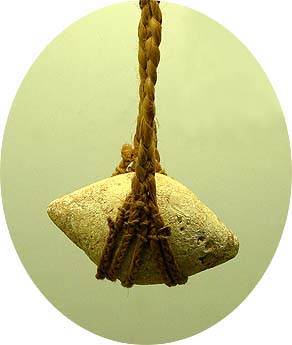
The One Who Guided The Stone!

Your adversary would love for you to assume the worst about your situation. He would enjoy seeing you heave a sigh and resign yourself to feelings of depression. However, it's been my experience that when God is involved, anything can happen. 

The One who directed that stone in between Goliath's eyes and split the Red Sea down the middle and leveled that wall around Jericho and brought His Son back from beyond takes delight in mixing up the odds as He alters the inevitable and bypasses the impossible.  

The blind songwriter, Fanny Crosby, put it another way: "Chords that were broken will vibrate once more."

Charles R. Swindoll